適用場景
- 生活垃圾收運
- 園區固廢轉運
- 市政環衛清運
- 商業區垃圾收集
 LIWEI TRUCK特種車輛製造商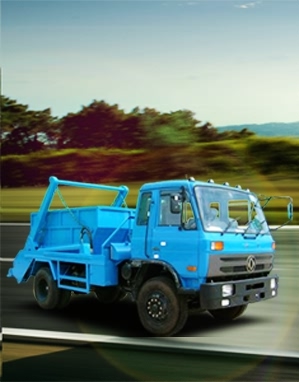
圍繞實際工況選擇配置
在售車型
選購指南
Garbage collection vehicles are core equipment for municipal sanitation and large factory/mining waste transport. They are classified into six major types by function: compression type, dump type, swing arm type, self-loading/unloading type, sealed type, and hook arm type. They mainly use hydraulic systems and sealed structures to achieve waste compression and leak prevention functions, offering advantages of reliable quality, low failure rate, easy maintenance, and low operating costs.
Compressed garbage truck adopts mechatronics technology, through the compartment, loading device and push shovel and other special devices to achieve garbage dumping, crushing, powerful loading, compaction and unloading. Equipped with a computer control system, it can set fully automatic and semi-automatic operation modes, which not only reduces the labor intensity of sanitation workers, but also greatly improves the working environment. Key components are imported, and the dual safety system has both computer control and manual operation functions.
Hanging bucket garbage truck (self-loading/unloading type) single working cycle time does not exceed 50 seconds, residual ash rate is below 3‰, compatible with 240L/360L/660L standard garbage bins, daily processing capacity can reach 500-800 bins. Optional compression function and kitchen waste treatment module expansion capability. Pure electric version is equipped with lithium iron phosphate battery, range of 200 kilometers, supports wireless remote control operation.
Export-type garbage trucks are adapted to the emission standards and interface configurations of the destination country's regulations. Intelligent weighing systems and GPS positioning technology are widely applied in multiple regions to build an information-based management platform. The smart supervision system developed in Chengdu integrates satellite positioning data and utilizes AI algorithms to automatically identify violations.
熱門問題
Current trends include: ① intelligent monitoring systems and 5G automotive-grade communication modules enabling platoon coordination and real-time data transmission; ② new energy adoption (lithium iron phosphate batteries, LNG clean energy); ③ fully automatic bin-tipping mechanisms to enhance operational efficiency; ④ partitioned compartment structures to accommodate waste sorting requirements; ⑤ dry-wet separation designs equipped with front and rear independent waste containers.
Main issues include high operating noise and poor sealing reliability. Countermeasures: carefully select the chassis and power take-off, use sound-absorbing materials to reduce vibration; improve machining precision through optimization of the hydraulic system and loading mechanism; install edge baffles on the packer to prevent waste spillage; adopt a certain slope on the compartment floor to prevent leachate leakage; install a sump tank below the packer.
獲取配置方案